Published on Wednesday, 30 August 2023 at 12:00:50 PM
WA Health is warning residents and travellers that Ross River virus (RRV) has been detected in mosquitoes collected from the South West for the first time in two years.
Department of Health Medical Entomologist Dr Jay Nicholson said that virus activity had been detected at multiple trapping sites by the Department’s mosquito surveillance program, indicating that RRV is now active in the South West.
“Over the past fortnight, the virus has been detected in mosquitoes collected from Leschenault to east Busselton, along the coastal corridor. Mosquito numbers are increasing in the region due to the onset of warmer weather.”
While the immediate risk is likely to be greatest in coastal areas near seasonal wetlands and saltmarshes, the virus may become active further south and inland with the onset of warmer weather. Therefore, Dr Nicholson is urging precautions to avoid mosquito bites over the coming months.
“Mosquito management is being carried out by local government in collaboration with the Department of Health in areas with a recognised risk of mosquito-borne disease,” he said.
“However, it is not realistic to rely on mosquito management programs alone to control mosquitoes – people living in or travelling to the region also need to take their own precautions to avoid mosquito bites.”
The Shire of Dardanup conducts a comprehensive mosquito control program with the specific purpose of reducing the incidence of mosquito-borne diseases in the community – in particular: Ross River Virus, and Barmah Forest Virus.
The Shire is part of a co-operative with the Shire of Harvey and the City of Bunbury known as the “Leschenault CLAG” (Contiguous Local Authorities Group).
The CLAG pools it’s financial and material resources to ensure the greatest impact in reducing mosquito numbers. The CLAG also receives support from the Department of Health in the way of funding, provision of a helicopter for aerial bombardment of mosquito-breeding wetlands, research and technical support.
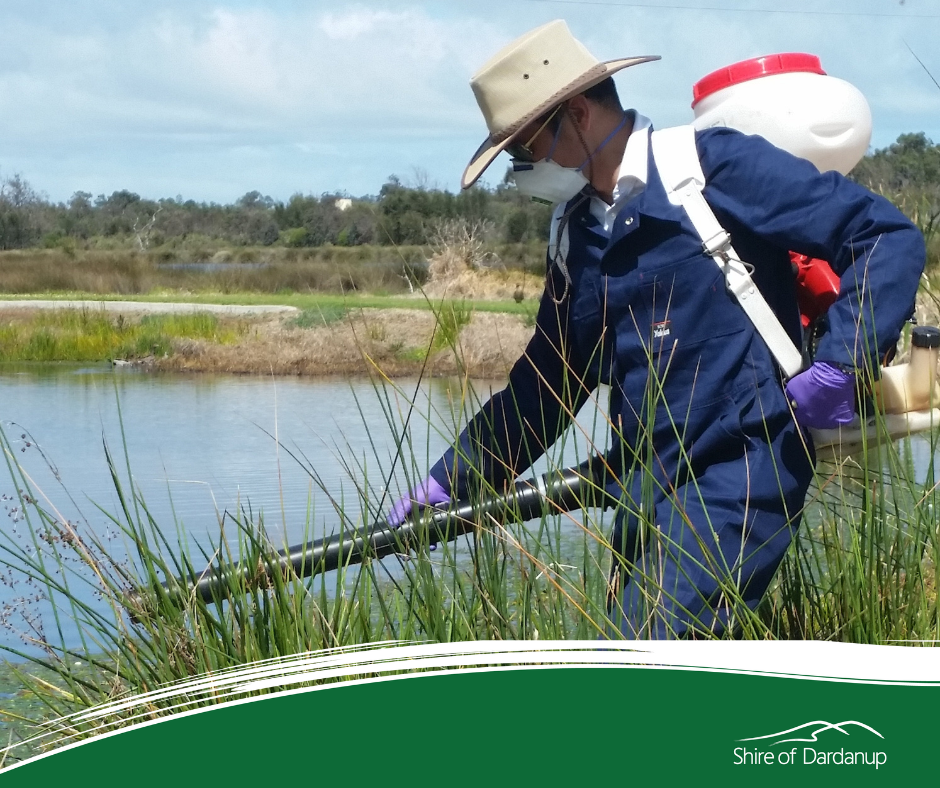
Environmental Health Officers conduct treatment of mosquito-breeding water-bodies on public land. You may request treatment if you are experiencing higher than usual mosquito numbers.
Symptoms of RRV include painful or swollen joints, sore muscles, skin rashes, fever, fatigue and headaches, lasting for weeks to months. The only way to diagnose whether you have a mosquito-borne disease is to visit your GP and have a specific blood test.
There is no vaccine, cure or specific treatment for RRV, so it is important that people take care to prevent being bitten by mosquitoes.
People living or travelling in the South West region should adopt the following simple measures to prevent mosquito bites:
- Avoid outdoor exposure to biting mosquitoes, particularly at dawn and early evening.
- Wear protective (long, loose-fitting, light-coloured) clothing when outdoors.
- Apply an effective personal mosquito repellent containing diethyltoluamide (DEET), picaridin or Oil of Lemon Eucalyptus (OLE), also known as PMD, evenly to all areas of exposed skin and always follow the label instructions.
- Ensure insect screens are installed and in good condition on houses and caravans.
- Use mosquito coils and mosquito lanterns and apply barrier sprays containing bifenthrin in patio and outdoor areas around houses.
- Ensure infants and children are adequately protected against mosquito bites, preferably with suitable clothing, shoes/socks, bed nets or other forms of insect screening.
- Keep grass/weeds and other vegetation short to stop mosquitoes seeking shelter and hiding around the home.
- Remove water holding containers from around the home and garden to ensure mosquitoes do not breed in your own backyard.
For more information on how to prevent mosquito bites visit: http://healthywa.wa.gov.au/fightthebite
Back to All News